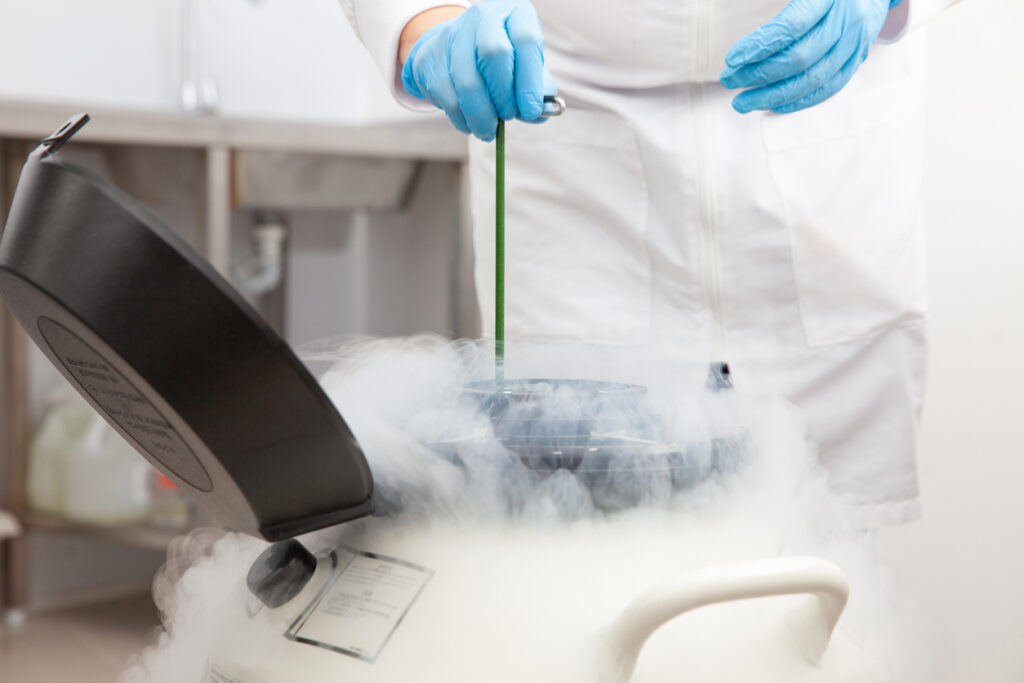
In industries where precision and performance are non-negotiable, manufacturing components for cryogenic environments requires exceptional engineering and machining expertise. Cryogenic systems operate at extremely low temperatures, placing unique demands on materials, tolerances, and part integrity.
What Are Cryogenic Applications?
Cryogenic applications involve systems that store, transport, or operate with liquefied gases such as nitrogen, oxygen, hydrogen, or helium at temperatures far below freezing. Components used in these systems must withstand:
- Extreme cold
- Thermal contraction
- High pressure
- Corrosive or reactive environments
- Repeated thermal cycling
These challenges require carefully selected materials and highly controlled machining processes to ensure parts maintain dimensional stability and structural integrity.
Why Precision Machining Matters in Cryogenic Environments
Machining components for cryogenic use demands a higher level of accuracy and consistency than standard manufacturing. Precision CNC machining supports cryogenic systems by delivering:
- Dimensional Accuracy: Tight tolerances ensure proper sealing and reliable performance even as materials contract at low temperatures.
- Material Integrity: Specialized machining techniques preserve the strength and properties of materials such as stainless steel, aluminum alloys, titanium, and other cryogenic-rated metals.
- Superior Surface Finishes: Smooth surfaces reduce the risk of leaks, contamination, and stress concentrations in critical components.
- Reliability in Extreme Conditions: Well-machined parts improve system longevity and reduce failure risks in mission-critical environments.
Applications Across Critical Industries
Precision-machined components designed for cryogenic environments support a wide range of industries, including:
- Aerospace: Fuel system components, housings, and structural parts used in launch vehicles and spacecraft.
- Defense: Parts engineered for durability and performance in extreme operational conditions.
- Medical Devices: Components for MRI systems, laboratory equipment, and cryogenic storage solutions.
- Energy: Valves, fittings, and housings for liquefied natural gas (LNG) and hydrogen systems.
Integrating CNC Milling and Turning
Advanced CNC milling and precision CNC turning enable the production of intricate, multi-sided components required for cryogenic systems. These capabilities allow manufacturers to achieve:
- Complex geometries
- Consistent repeatability
- Reduced secondary operations
- High-precision results across production runs
These technologies are essential for OEMs and contract manufacturing partners producing parts for extreme-temperature applications.
DPI’s Expertise in Machining for Cryogenic Applications
At DPI, we specialize in manufacturing precision components used in cryogenic environments. Our advanced CNC machining capabilities ensure every part meets the demanding requirements of extreme-temperature performance and reliability.
By pairing technical expertise with robust quality control processes, DPI delivers components designed to perform under the most challenging conditions. We also provide integrated OEM support services and supply chain solutions that streamline production from prototype through final delivery.
Quality You Can Count On
Every component manufactured for cryogenic applications undergoes rigorous inspection and quality assurance to ensure compliance, accuracy, and long-term dependability. Our commitment to precision ensures that each part performs as intended, even in the harshest environments.
Ready to Build Components for Extreme Environments?
When performance matters at the coldest temperatures, trust DPI’s expertise in precision CNC machining for cryogenic applications. Contact us today or submit your RFQ to discuss your complex machining requirements and learn how DPI can support your next project.